


Research
Publications
Taorui Guan
Contractual Bundles for Innovation
The question of how contracts promote innovation has long attracted scholars’ attention. This Article tackles this question by studying one contractual mechanism — bundling arrangements — that innovators frequently use to transfer other assets along with a patent license. It examines 400 patent licensing transactions that public companies filed with the Securities and Exchange Commission, and finds that 42.25% of them included…
February 6, 2023

不用智能電話的人
A piece of writing by Anne Cheung published on Ming Pao in January 2023.
January 12, 2023

Laura Pedraza-Fariña and Ryan Whalen
The Ghost in the Patent System: An Empirical Study of Patent Law’s Elusive 'Ordinary Artisan'
Patent law shares with tort law the presence of an artificial character that structures judicial decision-making. Much like the reasonable person in tort law, the “person having ordinary skill in the art” (or PHOSITA) frames judicial inquiries into such central patent law questions as whether an invention is obvious, set out in sufficient detail, or infringed by a competitor. The PHOSITA’s perspective…
November 15, 2022
Adrian Kuenzler
What competition law can do for data privacy (and vice versa)
Attempts to temper big technology firms’ outsized influence in online advertising demonstrate a convergence of opinions between experts as to the extent that the activities of such companies impinge on aspects of citizens’ lives, ranging from the loss of privacy to instances of exclusionary behaviour by incumbents drawn up to handicap competitors. But cutting back big technology firms’ influence through competition law…
November 1, 2022

Benjamin Chen, Alexander Stremitzer and Kevin Tobia
Having Your Day in Robot Court
Should machines be judges? Some say “no,” arguing that citizens would see robot-led legal proceedings as procedurally unfair because the idea of “having your day in court” is thought to refer to having another human adjudicate one’s claims. Prior research established that people obey the law in part because they see it as procedurally just. The introduction of “robot judges” powered by…
October 20, 2022
禮物
A piece of writing by Anne Cheung published on Ming Pao in October 2022.
October 6, 2022
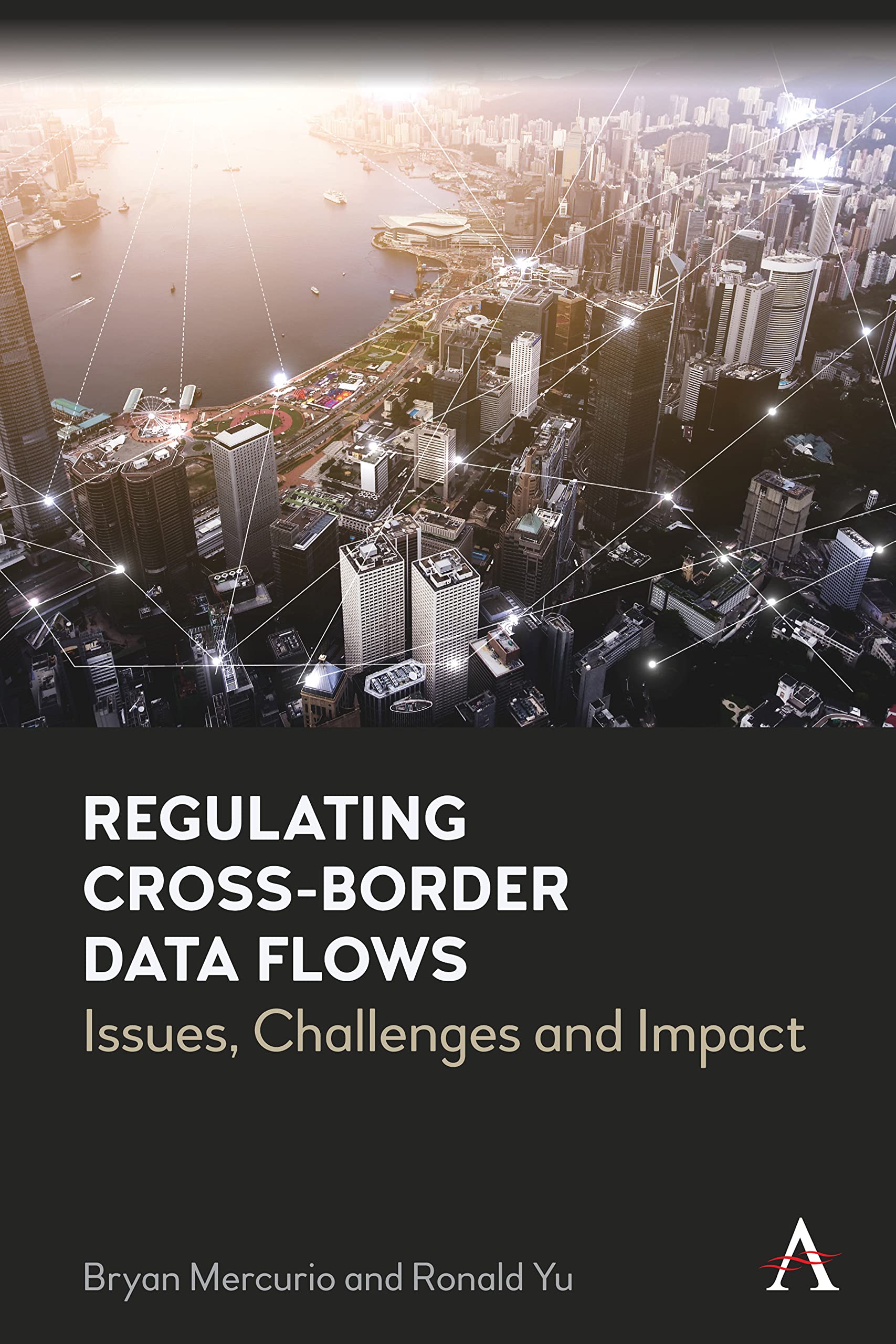
Bryan Mercurio & Ronald Yu
Regulating Cross-Border Data Flows: Issues, Challenges and Impact
Yu, Ronald & Mercurio, Bryan, Regulating Cross-Border Data Flows: Issues, Challenges and Impact (Anthem Ethics of Personal Data Collection), Anthem Press, August 2022.
August 1, 2022
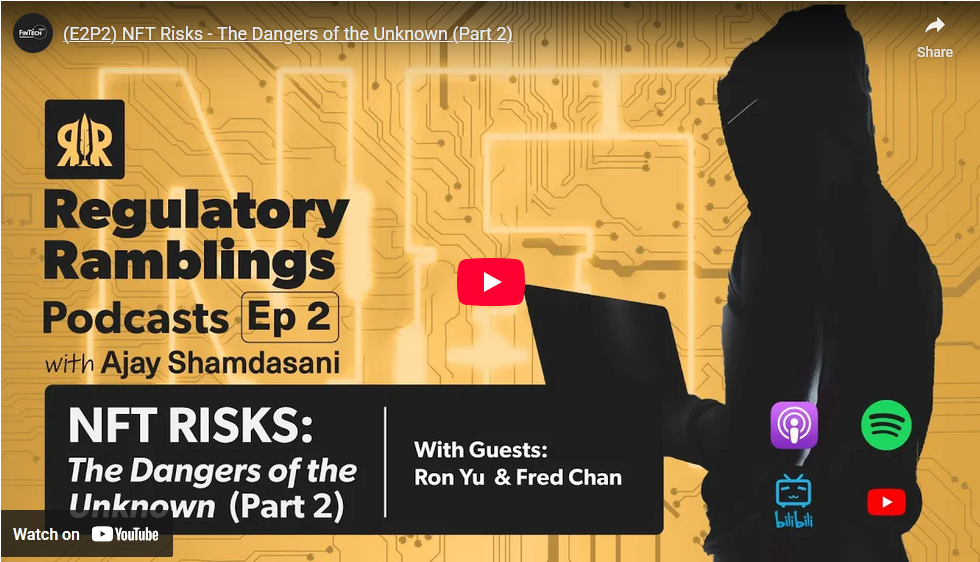
Ronald Yu and Fred Chen
NFT Risks: The Dangers of the Unknown (Part 2)
Yu, Ronald & Chen, Fred, NFT Risks: The Dangers of the Unknown (Part 2), Regulatory Ramblings by the HKU FinTech – HKU-SCF FinTech Academy, Apple podcast, July 14, 2022.
July 14, 2022
Ronald Yu & Bryan Mercurio
Does Hong Kong Need a Coherent Policy on Cross Border Data Flows to Really Be Smart?
Data flows are becoming ever more important to smart cities. Owing to the plethora of interconnections, an action in one area can result in unintended consequences elsewhere–and while a holistic approach to managing data and data flows sounds desirable, it remains to be seen whether such an approach is achievable. This chapter will explore the conflicting legal and other issues smart cities…
May 29, 2022
Ryan Whalen
The What, Why, and How of Automated Patent Decision-making
The patent system is slow, expensive, and inaccurate. So much so that some refer to it as “broken.” Meanwhile, patent applications are increasing in number and complexity. Examiners are overworked, which leads them to make more incorrect decisions. This has led some to advocate for increased use of technologies, and in particular patentability classifiers, at patent offices. This essay provides an…
May 9, 2022