


Research
Publications

Ryan Whalen
Defining Legal Technology and its Implications
Legal technological developments have been both lauded as the promising future of the law and derided as a danger to the fundamentals of justice. This article helps reconcile these divergent perspectives by providing a definition of legal technology and a framework through which to understand its different types and their potential implications for the legal system and society more generally. Mapping technologies…
April 28, 2022

Haochen Sun
Technology and the Public Interest
In this groundbreaking work, Haochen Sun analyzes the ethical crisis unfolding at the intersection of technology and the public interest. He examines technology companies’ growing power and their increasing disregard for the public good. To tackle this asymmetry of power and responsibility, he argues that we must reexamine the nature and scope of the right to technology and dynamically protect it as…
April 23, 2022
Haochen Sun
Protecting the Public Interest Through Intellectual Property Law: The Creative Approach of Chinese Judges
Today, Chinese judges play a leading role in the global protection of intellectual property (IP) rights. With China’s judiciary handling more intellectual property lawsuits than any other jurisdiction, their work is prominent not only for its quantity but also for its quality. While acting to safeguard IP owners’ private interests, Chinese judges have also in their rulings effectively protected public interests by…
April 18, 2022
Ryan Whalen and Rachel Zingg
Innovating under Uncertainty: The Patent-Eligibility of Artificial Intelligence after Alice Corp. v. CLS Bank International
Artificial intelligence-related inventions raise complex questions of how to define the boundaries around patentable subject matter. In the United States, many claim that the recent doctrinal developments by the Supreme Court have led to incoherence and excessive uncertainty within the innovation community. In response, policymakers and stakeholders have suggested legislative amendments to address these concerns. We first review these developments, and subsequently…
April 5, 2022

Haochen Sun
Redesigning Copyright Protection in the Era of Artificial Intelligence
How to protect the creations of artificial intelligence (“AI”) systems through copyright law is one of the most significant and complex legal issues of our time. Debated by stakeholders around the world, the issue has so far evaded consensus. However, a series of administrative and judicial rulings has altered the landscape. In 2019, a Chinese district court affirmed the copyrightability of a…
March 18, 2022
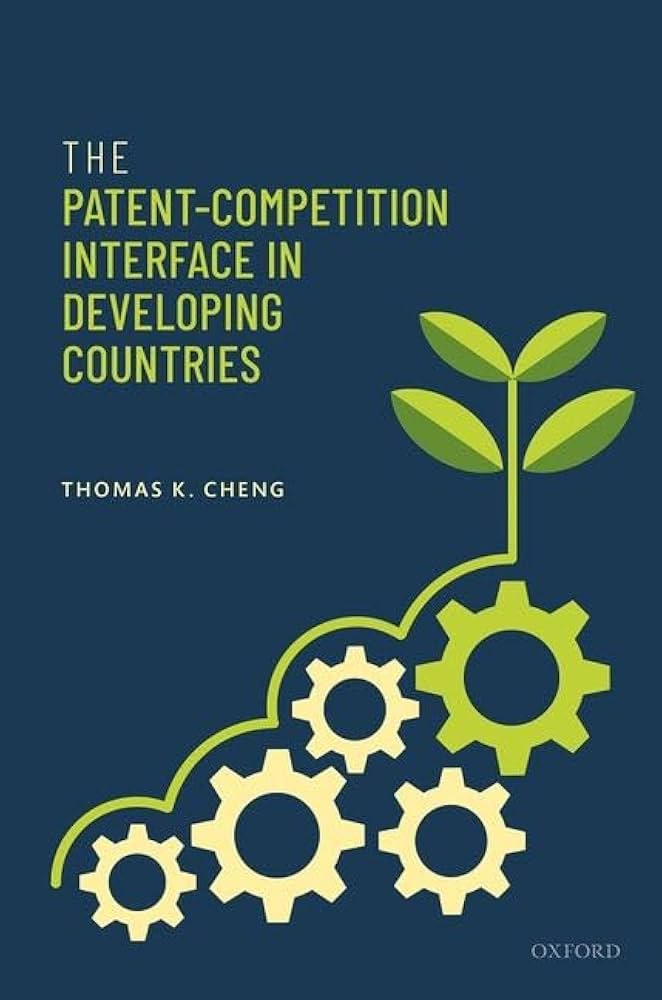
Thomas Cheng
The Patent-Competition Interface in Developing Countries
About the book: Proposes a development stage-specific approach to the patent-competition interface in developing countries, taking into account their technological capacity Offers a detailed illustration of the approach with a wide range of patent exploitation practices, including analysis of the relevant theoretical issues and a survey of the relevant case law from the US, the EU, and select developing countries Provides an…
March 16, 2022

Christopher Buccafusco, Jonathan S. Masur, Ryan Whalen
How Many Latours Is Too Many? Measuring Brand Name Congestion in Bordeaux Wine
Firms rely on brand names to market goods to consumers, and consumers rely on brand names to locate goods that satisfy their preferences. If multiple firms are using the same or similar names, consumers may be confused about which product to buy, and firms may not obtain the benefits of their investments in quality. Recently, both firms and scholars in a number…
February 18, 2022

Anne Cheung & Yongxi Chen
From Datafication to Data State: Making Sense of China’s Social Credit System and Its Implications
We live in an age of datafication wherein nearly all aspects of our lives can be transformed into data and evaluated. The authors seek to make sense of the heightened datafication-enabled social control under China’s Social Credit System (SCS) by developing the concept of the data state. A “data state” is defined as a governance model enabling the state to comprehensively monitor,…
December 9, 2021

Adrian Kuenzler
On (some aspects of) social privacy in the social media space
Recent scholarly debates about privacy in digital markets involve two distinct domains: privacy as individual autonomy; and privacy as a social practice of information-sharing and visibility. Both domains are preoccupied with different questions but legal scholarship does not always account for their disparity. On the one hand, the autonomy scholars who study privacy are inclined to stress the manner in which privacy…
October 21, 2021
Ronald Yu
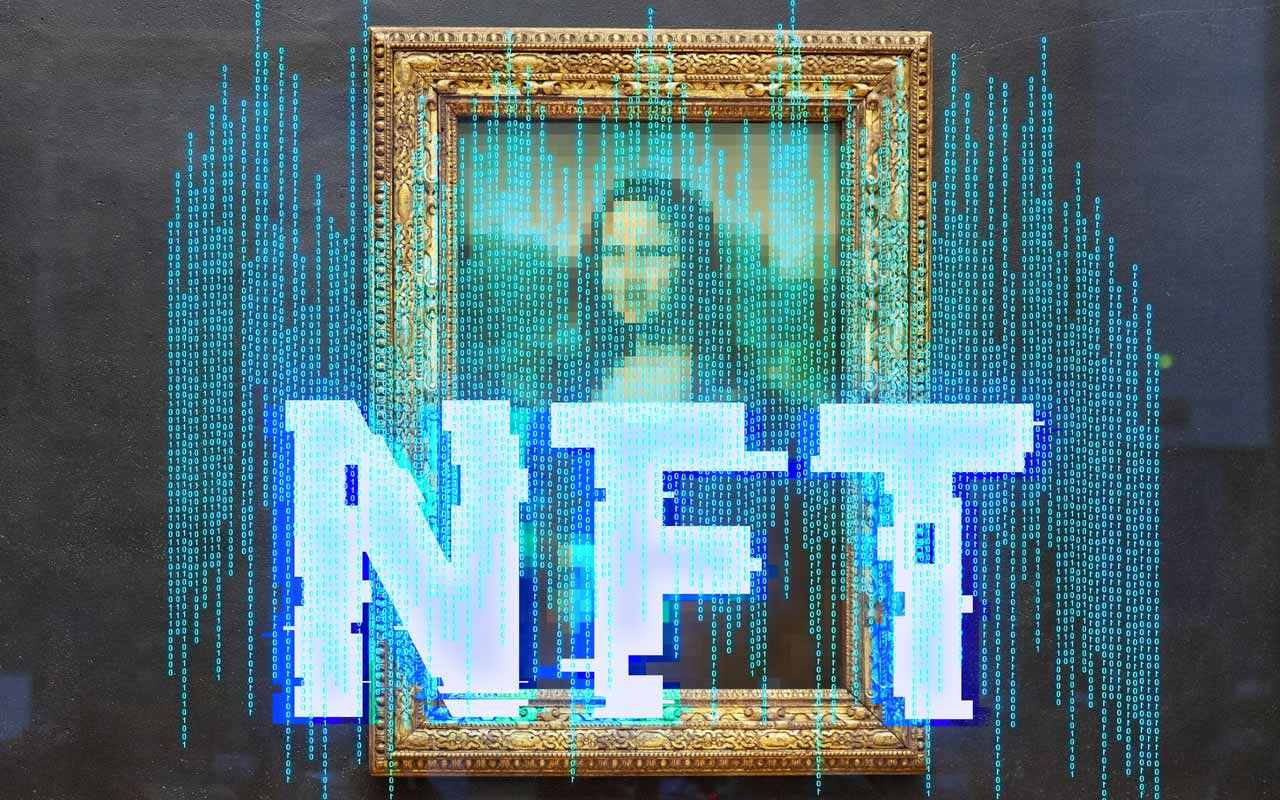
The Complexities of IP and NFTs
This online article talks about what NFT is, and how the the Intellectual Property issues relating to NFTs add new layers of complexity to the digital assets. To view the full online article, please click here: https://www.inhousecommunity.com/article/complexities-ip-and-nfts/ Author: Ronald Yu Published in In-House Community Magazine, Vol. 1, Issue 2, June 2021
June 23, 2021